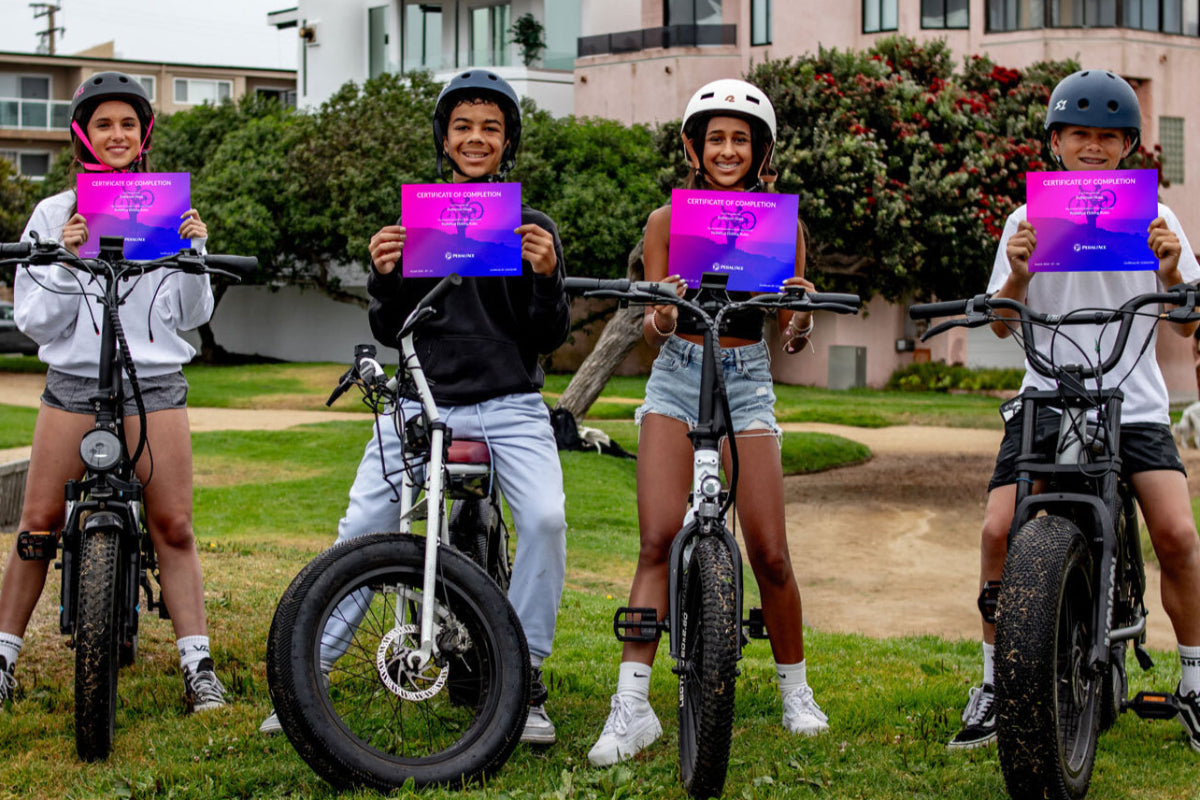

Ebikes are increasingly used to get teens and tweens to school. While ebikes bring some welcomed benefits—like reduced traffic congestion—they also bring real safety concerns. This leaves administrators asking: How can schools keep students, parents, and staff safe around ebikes?
- Why teens need ebike education
- Why schools are getting involved with ebikes
- How schools are implementing ebike safety policies
- what should schools look for when selecting an ebike safety course?
- How districts identify which students have earned the right to park on campus
- How ebike policies are enforced
- Next steps for establishing your school’s ebike safety program
Why teens need ebike education
As electric bike use soars among middle and high school students, so do safety concerns. Most states have little to no restrictions on who can drive ebikes, and within this younger demographic of ebikers, most have never taken driver's ed and simply don’t know the rules of the road.
Why schools are getting involved with ebikes
Teenagers are unlikely to seek out safety training on their own. And when a course is provided to them, unless it’s required, most will not complete it. That’s where schools come in. Schools are in a unique position to incentivize teens by mandating they complete an ebike safety course in order to bring their ebikes on campus.
How schools are establishing ebike safety programs
Many schools have adopted ebike policies that require some combination of
- Signatures from students and parents on the school’s ebike policy
- A Certificate of Completion from an approved ebike safety course
Then, once fulfilled, students earn the privilege of parking their ebike on campus.
How schools are implementing ebike safety policies
Ebike safety courses are at the heart of these school policies.
Where are schools getting ebike safety courses from?
Schools are not creating the courses themselves but instead using online and in-person classes that were created by
- cycling and safety experts, ebike enthusiasts, educators
- local government or police departments
- bicycle safety groups and coalitions
Are courses online or in-person?
Some schools use just one or the other, but many districts offer both options to families.
Online courses have the benefit of flexibility. Students can take them at their own pace and fit the course into their busy schedule.
Who pays for the ebike course?
Some schools cover the entire cost of the courses, others ask parents or guardians to pay, and sometimes it’s a hybrid.
Regardless of who foots the bill, schools will likely receive discounted pricing to help offset the cost.
How do schools track course completions?
It varies by school. Some ask students to submit their Certificates of Completion to the school, which invites some potential for fraud and can be a bit disorganized, especially. when some students submit paper certificates, others send a photo of their certificate, and others email a digital copy.
A cleaner, more manageable option when course providers share real-time reporting on student status and completions via a secure, online dashboard.
What should schools look for when selecting an ebike safety course?
- A curriculum that covers all of the critical safety aspects and includes tests and quizzes.
- A course provider that manages the administrative tasks, like course registration, student support, issuing certificates of completion, and even distributing parking stickers.
- Reasonable pricing. Free courses are out there, but quality is questionable, and you're unlikely to get any support on administrative tasks. Instead, look for high-quality courses that offer bulk pricing or school partnership discounts.
PedalAce partners with schools to power their ebike safety safety programs. Learn more now >>
How districts identify which students have earned the right to park on campus
Sticker programs are the most popular. Once a student meets the requirements to park on campus, the school issues a sticker to be placed in a conspicuous spot on their ebike. Without a sticker, the ebike is banned from campus.
Another option could be stickers on student IDs, but stopping to show an ID before entering campus could create a bottleneck.
How ebike policies are enforced
If using the sticker method, the school may assign a staff member at each entrance to check for stickers. Admittedly, this method is easier to do at smaller schools. Policing the policy is likely the most labor-intensive task for schools.
Next steps for establishing your school’s ebike safety program
-
Download our free Ebike Safety Policy template and can use it to help craft your district’s policy
-
Select an ebike safety certification course, like PedalAce, for your students.
-
Determine how your district will enforce the new ebike policy and requirement, e.g., a sticker program.